Cash Advance vs Personal Loan: Best Exclusive Guide.
Article Structure

Money emergencies hit fast, and the choice between a cash advance and a personal loan can feel urgent. Both give you quick access to cash, but they work very differently and can affect your finances for months or even years.
This guide breaks down how each option works, what it costs, and in which situations one is clearly better than the other.
What Is a Cash Advance?
A cash advance is short-term credit that you usually get from a credit card or a payday lender. You borrow a small amount, pay high fees and interest, and repay it quickly—often by your next paycheck.
People often use a cash advance when they have no savings and need money the same day for rent, food, or a bill that cannot wait.
Types of Cash Advances
Cash advances come in a few common forms. The details differ, but the idea is similar: fast cash at a high price.
- Credit card cash advance: You withdraw cash from an ATM or bank using your credit card. Interest starts right away and the rate is usually higher than your normal card purchases.
- Payday loan: A small loan due on your next payday, often with a fixed fee instead of a normal interest rate. The real cost, once converted to an annual percentage rate (APR), can be very high.
- Online cash advance apps: Apps that give you an advance on your paycheck. Some charge subscription fees, tips, or fast-funding fees.
Many people choose cash advances because they are fast and do not always require a credit check, but these benefits come with serious costs and risks.
What Is a Personal Loan?
A personal loan is an installment loan. You borrow a fixed amount and repay it over a set period in equal monthly payments. Banks, credit unions, and online lenders offer personal loans for many purposes.
Unlike cash advances, personal loans are usually structured for medium or longer repayment terms, which keeps each payment more manageable.
Common Uses for Personal Loans
People often use personal loans for planned or larger expenses. The lower interest rate and set schedule can make them easier to manage.
- Consolidating credit card debt into one monthly payment
- Covering medical bills or dental work
- Paying for car repairs or home repairs
- Funding a move, training course, or major purchase
Personal loans take longer to get than a cash advance, but they can save a large amount in interest over time.
Key Differences: Cash Advance vs Personal Loan
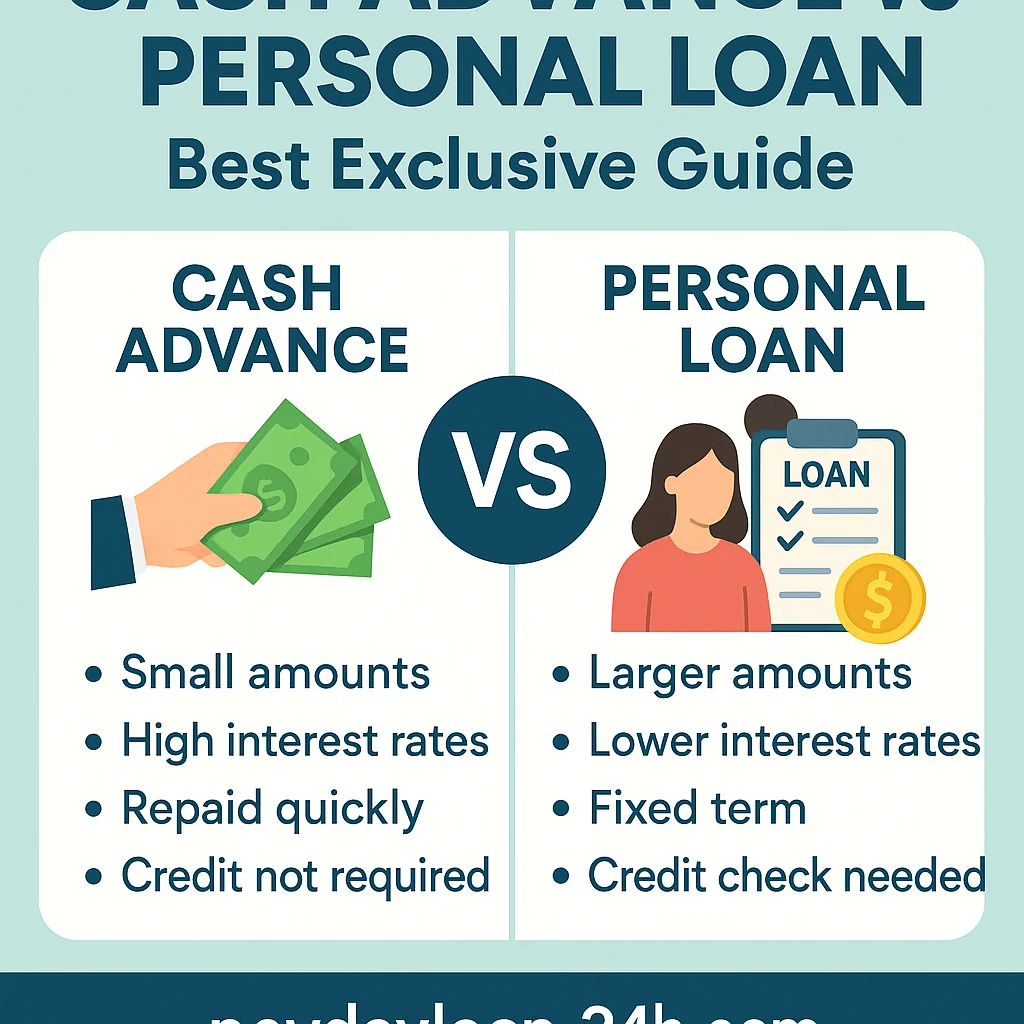
Both options give you money you do not have, but the price and structure are not alike. The table below sums up the main differences so you can compare them at a glance.
| Feature | Cash Advance | Personal Loan |
|---|---|---|
| Typical amount | Small (often a few hundred) | Small to large (hundreds to tens of thousands) |
| Interest / cost | Very high APR and fees | Lower APR than cash advances in most cases |
| Repayment term | Short-term (days to a few months) | Medium to long-term (months to several years) |
| Speed of funding | Immediate or same day | Same day to several days, depending on lender |
| Credit check | Light or no traditional check in many cases | Standard credit check almost always |
| Impact on debt cycle | Higher risk of repeat borrowing and debt spiral | More stable payoff plan with fixed end date |
These differences matter most if you are already under pressure. A fast but costly option can make a short-term problem much worse over time.
Pros and Cons of Cash Advances
Cash advances can feel like a relief for a few days. The trouble starts when repayment day arrives and you are still short on cash.
Advantages of Cash Advances
Cash advances have a few clear strengths that explain why people use them despite the high cost.
- Speed: You can often get cash within minutes from an ATM or same-day from a lender.
- Easy approval: Lenders may focus on your income instead of your credit score.
- Short-term fix: Helpful for a one-time emergency if you are sure you can repay fast.
For example, if your car breaks down two days before payday and you need it for work, a small cash advance repaid in full next week may be less damaging than missing work and losing income.
Disadvantages of Cash Advances
The downsides are serious and often hidden behind simple-feeling fees or “quick cash” messaging.
- Very high expense: Fees and interest add up fast. The APR can jump into triple digits.
- Short repayment window: You may have to pay the full amount plus fees on your next payday.
- Debt cycle risk: Many borrowers roll over the loan or take a new one to pay the first.
- No grace period: Credit card cash advances start charging interest on day one.
Picture this: you borrow just enough to cover rent, then repay it from your next paycheck. That paycheck now leaves you short again, so you borrow once more. This loop can last months and drain your future income.
Pros and Cons of Personal Loans
Personal loans require more paperwork, but they are usually less punishing and easier to plan around if you qualify.
Advantages of Personal Loans
Personal loans offer structure and a clearer path to being debt-free.
- Lower interest rate: The APR is usually much lower than cash advances, especially if your credit is fair or better.
- Fixed payments: You pay the same amount each month, which helps with budgeting.
- Longer term: You spread the cost across months or years, which keeps each payment smaller.
- Larger amounts available: You can cover bigger expenses without stacking multiple loans.
For instance, instead of taking three separate cash advances for medical bills, one personal loan with a two-year term may cut your monthly stress and reduce the total interest you pay.
Disadvantages of Personal Loans
Personal loans are not perfect and do not fit every emergency.
- Slower approval: You may wait a day or more for the lender to review your application.
- Credit requirements: A low credit score can mean denial or a higher interest rate.
- Longer debt period: You stay in debt longer than with a small, short-term advance.
- Possible fees: Some lenders charge origination fees or penalties for early repayment.
Still, even with these drawbacks, personal loans often remain cheaper and more stable than repeated cash advances.
Which Is Better: Cash Advance or Personal Loan?
The better option depends on your situation, but the cost gap is so large that personal loans win in most common cases, especially if you need more than a small amount or cannot repay in a few days.
Cash Advance Might Fit If…
In a narrow set of conditions, a cash advance can be the least bad choice.
- You need a small amount of money, for example under a few hundred.
- You can repay the full balance within days or by your next paycheck.
- You have no access to cheaper credit, such as a personal loan, overdraft, or help from family or friends.
- The cost of not paying (eviction notice, utility shutoff, losing a job) is even higher.
If you already know you will struggle to repay by the due date, a cash advance is usually a warning sign, not a solution.
Personal Loan Is Usually Better If…
Personal loans tend to come out ahead in everyday money problems that are larger or last longer.
- You need more than a few hundred in funding.
- You expect to repay over months, not days.
- Your credit is at least fair, or you can improve your terms with a co-borrower.
- You want predictable payments and a clear payoff date.
In these situations, the lower rate and structured plan of a personal loan usually save money and reduce stress compared with rolling cash advances.
How to Decide: Simple Step-by-Step Check
A short decision process can help you avoid a rushed choice while under pressure. Ask yourself the questions below before you sign anything.
- Can this expense wait? If it can wait even a week, compare personal loan offers first.
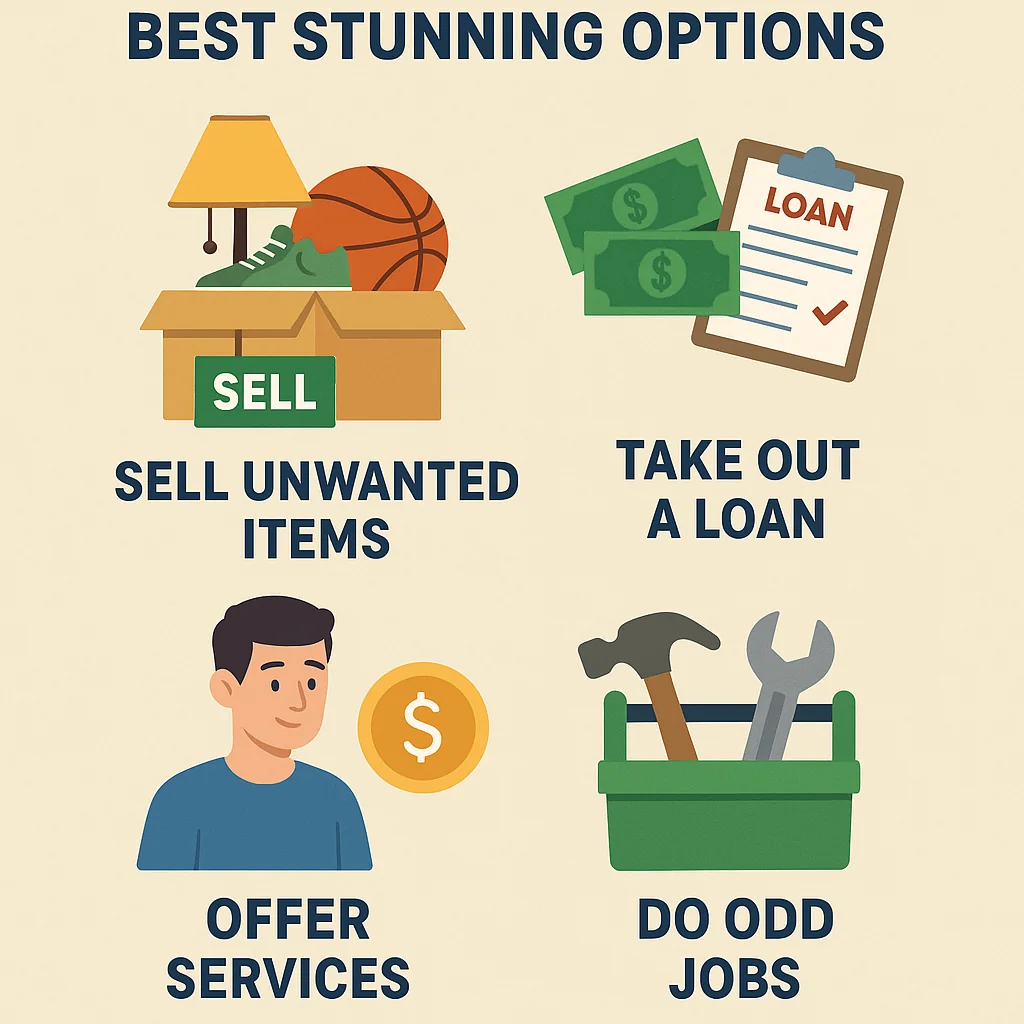
- Do I have any cheaper options? Think about payment plans with providers, employer advances, side work, or help from trusted people.
- How soon can I repay? If repayment will take more than one paycheck, a personal loan almost always costs less than a cash advance.
- What happens if my income drops? Fixed, smaller payments on a personal loan are often easier to handle than a large lump-sum cash advance due in days.
- Have I used cash advances before? If you are on your second or third advance, pause. You may be in a debt pattern that needs a different fix, such as budgeting support or debt counseling.
Be honest with yourself during this process. A few minutes of clear thinking can prevent months of expensive debt.
Practical Tips Before You Borrow
Once you know which option fits better, focus on details. Small choices can change the total cost by a lot.
- Compare APR, not just fees: A flat fee can sound small, but the APR may be extreme.
- Check all fees: Look for ATM fees, cash advance fees, origination fees, or late charges.
- Read the repayment rules: Note the due date, automatic debits, and any rollover rules.
- Borrow the smallest amount you can: Extra money may feel safe now but costs interest later.
- Plan a payoff strategy: Add the payment to your budget and cut or delay non-essential spending until the debt is cleared.
Even with a good loan, debt is still a claim on your future income. Treat it as a tool, not a habit.
Choose Cost Over Speed When You Can
Cash advances are built for speed, not for fair pricing. Personal loans are built for structure and lower cost, not instant cash. In most cases, the better choice is the one that charges less and gives you a realistic path to full repayment.
If you face an emergency, take a short pause before you borrow. Compare at least one personal loan offer with any cash advance option, check the total cost, and ask whether your future self will be able to handle the payments. That simple check can be the difference between a short setback and a long-term debt problem.