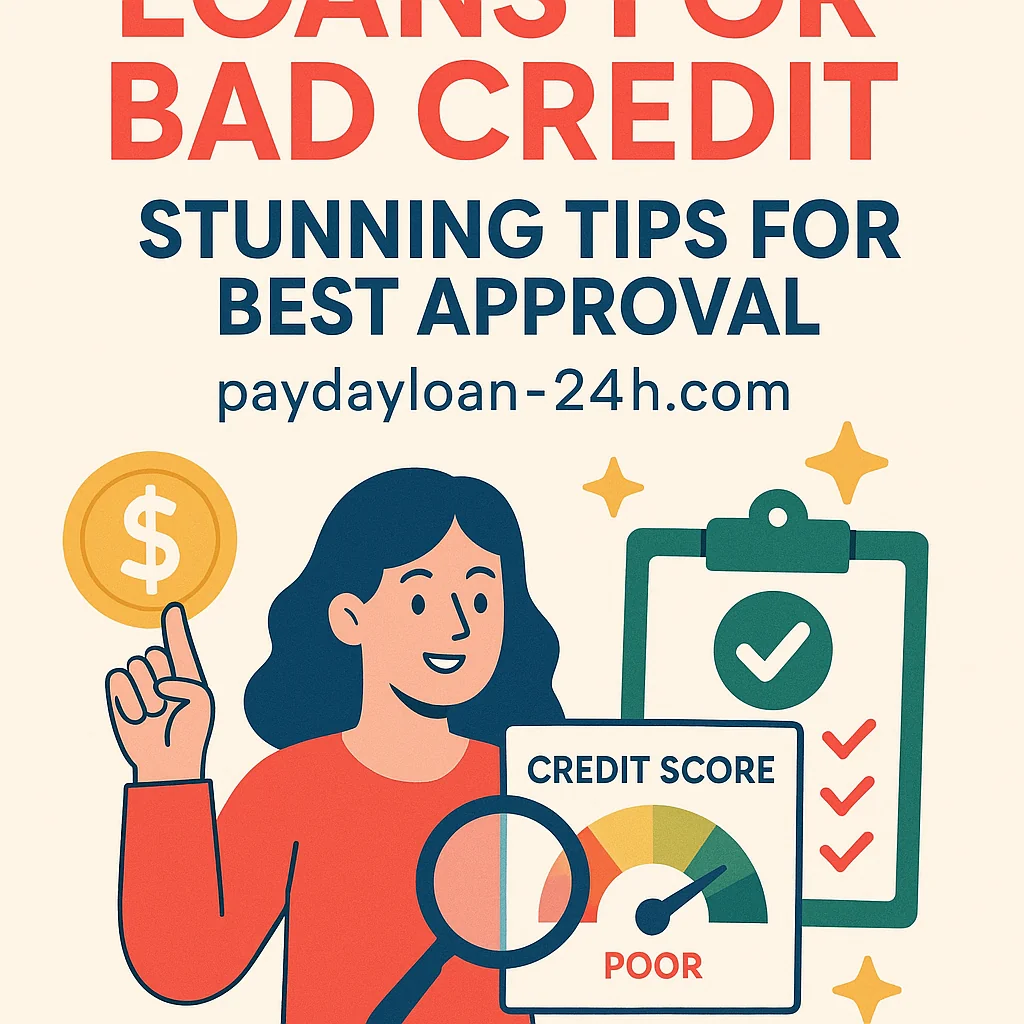
Loans for Bad Credit: Stunning Tips for Best Approval.
Article Structure

A low credit score does not freeze your access to money, but it does change your options. Lenders see you as higher risk, so they charge higher interest, add more fees, or ask for security. With a clear plan, you can still get a loan, protect your budget, and start rebuilding your score at the same time.
What “Bad Credit” Really Means for Loans
Bad credit usually means you have late payments, defaults, heavy use of credit, or very short credit history. Credit bureaus in many countries use a score range, for example 300–850 in the United States or 0–1000 in some other markets. In simple terms, lower score equals higher risk in the lender’s eyes.
A lender does not look at the number alone. It checks income, job stability, other debts, and how you have paid in the last 6–12 months. A thin file with few accounts can hurt almost as much as missed payments, because the lender has less data to judge your habits.
Main Types of Loans for Bad Credit
Many lenders say they accept “poor credit,” but they use different rules and charge different prices. It helps to know the main loan types so you do not jump into the first offer you see on your screen.
| Loan Type | Typical Use | Key Pros | Main Risks |
|---|---|---|---|
| Secured personal loan | Debt consolidation, large purchases | Lower rate than many bad-credit loans | Risk of losing the asset if you miss payments |
| Unsecured bad-credit loan | Emergency costs, small projects | No collateral needed, quick approval | High interest, strict fees for late payments |
| Credit union loan | Everyday borrowing, small consolidations | Often lower rates and more flexible rules | May require membership and basic credit checks |
| Guarantor / co-signed loan | Building credit, larger loan amounts | Better terms if guarantor has strong credit | Risk to the guarantor’s credit if you miss payments |
| Peer-to-peer loan | Personal projects, side business, debt payoff | More nuanced credit assessment | Can still be expensive for very low scores |
Before you choose a loan type, think about how long you need to borrow, how stable your income is, and how much you can afford each month without stress. A slightly higher rate on a shorter loan can cost less than a low-looking rate stretched over many years.
Top Lender Categories for Bad Credit Borrowers
The “best” lender depends on your income, country, and how bad your credit is right now. Instead of chasing brand names, focus on the category of lender and how it treats higher-risk borrowers.
1. Credit Unions and Cooperative Banks
Credit unions and cooperative banks run as member-owned institutions. They often look at your full situation instead of just a score. Many offer personal loans and small “starter” loans for members with weak credit, plus credit-builder products.
A member with past late payments but steady work for two years may get a fair loan with a clear rate and honest fees. The same person might only qualify for very expensive offers from online lenders that target poor credit borrowers.
2. Online Lenders That Specialize in Bad Credit
Many online lenders openly market to people with bad credit. They use fast applications and quick approvals. Some give instant decisions using automated checks on your income and bank data.
These lenders can be useful if you face an urgent bill, but you must read the full cost. Some charge interest that can double the amount you repay. Others add high “origination” fees, account fees, or penalties. Focus on the annual percentage rate (APR) and the total cost across the full term, not just the monthly payment.
3. Peer-to-Peer and Marketplace Platforms
Peer-to-peer platforms match you with individual or institutional investors instead of lending from their own balance sheet. Some platforms sort borrowers into risk grades and allow “near-prime” or “subprime” borrowers.
If your credit is damaged but not at the very bottom, you may get better terms here than from classic bad-credit lenders. On the other hand, if your score is extremely low or you have fresh defaults, you may still face high rates, or you may not qualify at all.
4. Microfinance and Community Lenders
In some regions, microfinance institutions and community development lenders offer small loans to people with low income or weak credit history. They often focus on self-employed workers, small traders, or people building a side business.
These loans can come with coaching, budgeting support, or group meetings. The amounts may be small at first, but successful repayment can open access to larger sums at lower cost over time.
5. Secured Lenders (Using Cars, Savings, or Property)
Some lenders give better terms if you secure the loan with a car, a savings account, or property. Because they can claim the asset if you fail to pay, they charge less interest than many unsecured bad-credit lenders.
This structure raises the stakes. Missing payments risks your car or savings. Use a secured loan only when you have a realistic, tested budget and stable income, and never borrow more than you can repay even if your income drops slightly.
How to Compare Bad Credit Loan Offers
You will likely see many offers once you start searching. A calm comparison process helps you avoid debt traps and spot fair deals faster.
- Check the APR, not just the rate: APR includes interest and many mandatory fees. Two loans with the same rate can have very different APRs if one has heavy extra charges.
- Look at the total cost: Multiply the monthly payment by the number of months, then add any upfront fees. This gives you a simple total you can compare across lenders.
- Review late and early repayment rules: Some lenders charge harsh fees if you miss a payment or want to clear the loan early. Flexible rules are worth real money over time.
- Check reputation and reviews: Search the lender’s name with words like “complaints” or “hidden fees.” A pattern of problems is a red flag.
- Test the customer support: Send a question by chat or email. Clear answers and honest tone signal a better chance of fair treatment later.
Save offers in a simple sheet or note. Compare at least three to five options before you decide. The extra hour you spend can save hundreds or even thousands in interest and fees over the life of the loan.
Approval Tips: How to Boost Your Chances Fast
You can take several quick steps before you apply that may raise your approval odds and reduce the rate you pay. Focus on actions that show lenders you can handle debt now, even if your past includes mistakes.
- Pay down small, high-use credit lines: If your credit cards or overdrafts are near their limits, even a small payment that brings usage below 70% or 50% can help.
- Check your credit report for errors: Wrong late marks, duplicate debts, or outdated negative items harm your score. Dispute them with the credit bureau and lender.
- Add proof of income and stability: Prepare payslips, bank statements, tax returns, or contracts. Lenders like steady patterns and clear evidence of regular income.
- Reduce existing monthly obligations: Cancel unused subscriptions or renegotiate other loans where possible. A lower debt-to-income ratio improves your profile.
- Consider a guarantor you trust: A family member or close friend with good credit can unlock better terms, but only if both sides understand the risk fully.
Even small positive changes in your profile can push you into a better risk band. An example: someone with heavy card usage and a few recent late payments may move from “decline” to “approve” by paying down 10–20% of their balances and showing three months of on-time payments.
Warning Signs: Lenders to Avoid With Bad Credit
Some lenders target people with bad credit because they assume you feel desperate. Recognizing danger signs protects you from deepening your financial problems.
Watch for these warning signals before you sign any contract.
- Promises of “guaranteed approval” without any checks on your income or identity.
- Pressure to decide immediately, especially with phrases like “offer expires in hours.”
- Requests for upfront payment just to “process” your application.
- No clear physical address, license number, or regulatory information.
- Very short repayment terms with extremely high fees, such as payday loans that roll over again and again.
A lender that respects you does not rush you or hide information. If anything feels off, step back. Ask for the full contract in writing and show it to a friend, advisor, or legal clinic before you accept.
Using a Bad Credit Loan to Rebuild Your Score
A well-managed loan can act as a tool to rebuild damaged credit. Lenders report your payments to credit bureaus, so each on-time payment becomes a positive mark in your record.
To use this to your advantage, set up automatic payments for at least the minimum amount, then add manual payments on top when you can. Keep an eye on your bank balance so you never bounce a payment. Over 12–24 months, this steady pattern can raise your score and open access to cheaper loans later.
Key Takeaways
Bad credit limits your choices, but it does not close every door. You still have access to credit unions, selected online lenders, peer-to-peer platforms, microfinance groups, and secured loans if you prepare and compare with care.
Focus on the full cost, not just the monthly payment. Improve small details in your profile before you apply, avoid lenders that use pressure or vague promises, and use any loan you take as a step toward better credit, not as a permanent fix. Over time, smart moves with even a small bad-credit loan can shift your finances in a healthier direction.