Personal Loans for Bad Credit: Stunning Best Options.
Article Structure

A low credit score does not block access to a personal loan, but it does change the rules of the game. If you know in advance what lenders look for and which terms are realistic, you can avoid expensive traps and push for better offers.
What “Bad Credit” Usually Means for Personal Loans
Lenders use credit scores to judge risk. A lower score signals more risk, so they raise rates and limit amounts. Each lender sets its own cutoffs, yet score ranges often fall into similar bands.
| Score Range (FICO-style) | Label | What to Expect from Lenders |
|---|---|---|
| 720+ | Excellent | Best rates, high approval odds, higher loan amounts |
| 660–719 | Good | Competitive rates, wide lender choice, solid terms |
| 600–659 | Fair | Higher rates, smaller amounts, more conditions |
| 580–599 | Poor | Limited options, steep interest, stricter checks |
| <580 | Bad / Very Poor | Few lenders, very high costs, more chance of denial |
Lenders may use FICO, VantageScore, or a local model, yet the logic stays similar: the lower the score, the higher the cost and the tougher the approval criteria. This is the trade-off you need to judge before you sign anything.
What to Expect from Rates, Fees, and Loan Amounts
With bad credit, the price of borrowing shifts first. Interest rates, fees, and even your allowed loan size change because the lender wants to cover a higher risk of late payment or default.
Interest Rates for Bad Credit Personal Loans
Interest rates for personal loans with good credit can be in the single digits. With bad credit, they can jump to double or even triple that level. A rate that looks high on paper can double the total cost of a loan.
- Expect higher APRs, often from the upper teens to 30% or more.
- Short terms often come with slightly lower APRs, but higher monthly payments.
- Longer terms may reduce the monthly bill but increase total interest paid.
For example, a borrower with good credit might pay 9% APR on a $5,000 loan over three years. With bad credit, the same loan can be offered at 24% APR, raising the monthly payment and the total interest by a wide margin.
Common Fees You Might See
Lenders can add several types of fees to personal loans for bad credit. Each fee cuts into the value you receive and raises the real cost of the loan.
- Origination fee: A percentage of the loan amount taken upfront.
- Late payment fee: A charge for paying after the due date.
- NSF/returned payment fee: A fee if your bank rejects a payment.
- Prepayment penalty: A charge for paying off the loan early.
An origination fee of 5% on a $4,000 loan means you only receive $3,800, but you still pay interest as if you received the full $4,000. This is why the APR figure, not just the “interest rate,” matters for comparison.
Loan Amounts and Terms
Lenders often limit how much they will lend to someone with bad credit. They may also steer such borrowers to shorter repayment periods, both of which reduce the lender’s risk.
- Loan amounts may range from a few hundred to a few thousand units of local currency.
- Long terms (5–7 years) are rare for bad credit; 1–3 years is more common.
- As the loan amount rises, lenders may request extra proof of income or a co-signer.
If you ask for a large amount with a low score, you may get a counter-offer for a smaller amount, a higher rate, or both. Expect to negotiate or adjust your request rather than receive your ideal numbers on the first try.
What Lenders Check Besides Your Credit Score
A bad credit score is not the only factor in a lending decision. Lenders also look at your income, debts, and basic identity data to decide if they feel safe offering a loan.
Income and Employment
Stable income can balance some credit issues. Lenders want proof you can afford the monthly payments without falling behind on other bills.
- Recent pay slips or bank statements.
- Tax returns for self-employed borrowers.
- Proof of benefits or pensions, where accepted.
A steady, documented income stream with realistic expenses can sometimes overcome a low score, especially for smaller loans with short terms.
Debt-to-Income Ratio (DTI)
Debt-to-income ratio compares your monthly debt payments to your monthly income. A high DTI tells the lender you are already stretched thin.
Many lenders prefer a DTI under 35%–40% for unsecured loans. With bad credit, they may want an even lower ratio to feel comfortable. This is one reason paying down existing debt before applying can help.
Identity and Fraud Checks
Lenders also run checks to confirm who you are and reduce the risk of fraud. These checks can include ID documents, proof of address, and contact verification.
Failing a fraud check or giving inconsistent information usually ends the application on the spot, even if you meet credit score and income rules. Honest, complete forms matter as much as the numbers.
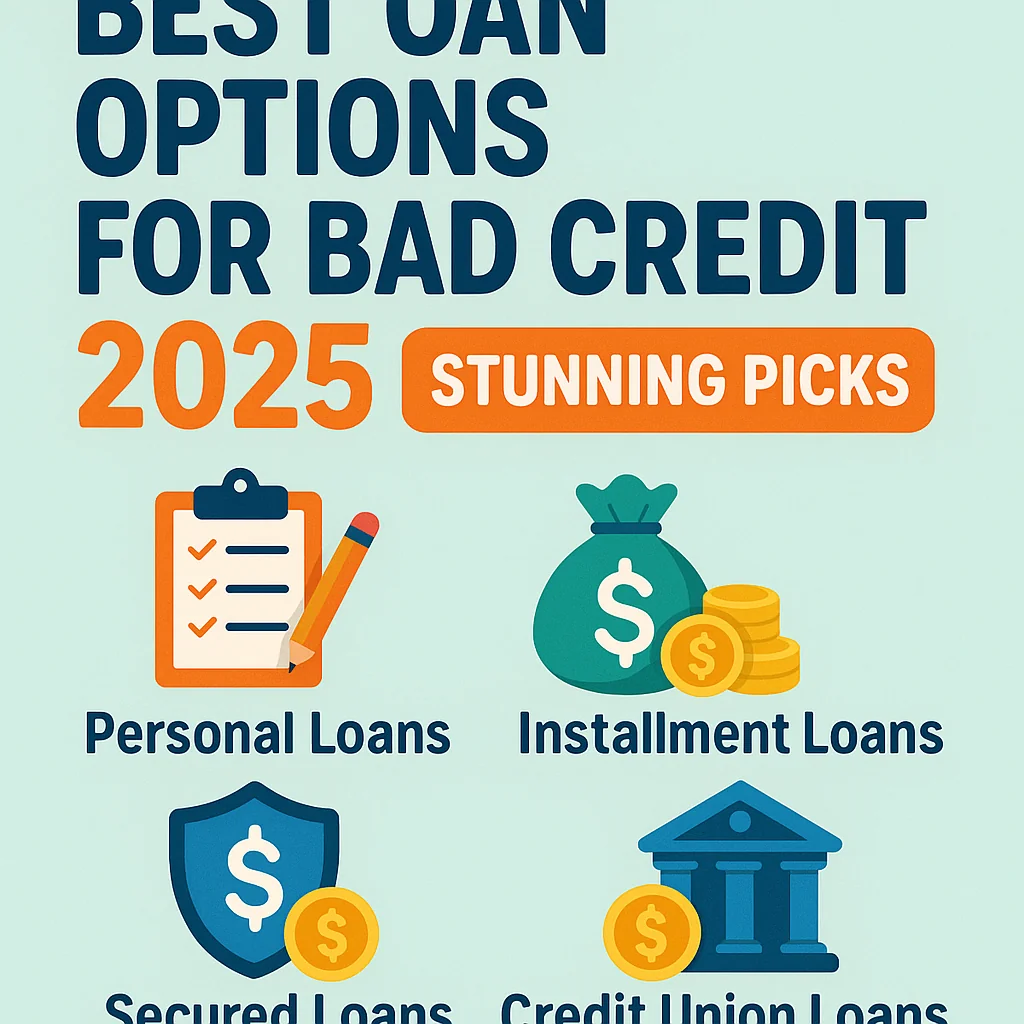
Types of Personal Loans Available with Bad Credit
Several loan types target borrowers with weaker credit. They differ in cost, risk, and impact on your credit profile, so it helps to know their main features before you agree to anything.
Unsecured Personal Loans
Unsecured loans do not require collateral. The lender relies only on your credit, income, and history. These are common but pricey for bad credit.
- Fast approval decisions for many online lenders.
- No asset at risk, yet higher rates and lower limits.
- Good for small to medium one-time expenses.
A typical case is someone with a 580 score using an unsecured loan to cover a medical bill, then paying it off aggressively over 18 months to limit interest costs.
Secured Personal Loans
Secured loans require collateral, such as a car, savings account, or other asset. The lender can claim this asset if you default on the loan.
- Lower rates than unsecured loans for the same score.
- Access to larger amounts, depending on the collateral value.
- Risk of losing the pledged asset if you miss payments.
This option can cut borrowing costs but adds real-world risk. The decision comes down to whether you trust your future cash flow enough to bet an asset on it.
Co-signed Loans
A co-signed loan uses another person with stronger credit to back your application. The co-signer promises to pay if you do not.
- Better approval odds and rates than going alone.
- Can help rebuild your credit if payments stay on track.
- Strains relationships if you fall behind and damage the co-signer’s credit.
A parent, partner, or close friend often acts as co-signer. Clear written agreements and shared access to the loan account can reduce stress for both parties.
How to Improve Your Chances Before You Apply
A few focused steps before you apply can move your offer from “painful” to “manageable.” These changes do not require years; even a single month of planning can help.
Check and Clean Up Your Credit Report
Start by pulling your credit report from major bureaus in your region. Check every item for accuracy and age. Errors and outdated records hurt your score for no good reason.
- Review personal data and account list for mistakes.
- Dispute wrong entries using the bureau’s process.
- Ask creditors to update paid or settled accounts.
Removing even one large incorrect collection account can unlock better loan terms than any “trick” during the application process.
Pay Down Small Debts and Reduce Utilization
High credit card balances signal risk. Paying down cards and small loans reduces your debt-to-income ratio and improves utilization, both of which can support a higher score.
- Prioritize high-interest cards and small balances you can clear fast.
- Keep cards open after paying them down to maintain total available credit.
- Aim to use below 30% of each card’s limit, less if possible.
Even a short, intense month of extra payments can make your profile look safer to lenders, which may soften the rate they offer.
Pre-Qualify Instead of Applying Blind
Many lenders offer pre-qualification using a soft credit check. This lets you see likely rates and terms without a hard inquiry on your report.
Use pre-qualification to compare several lenders side by side. Then apply only to one or two of the best offers to limit the number of hard checks, which can temporarily lower your score.
Red Flags and Predatory Loan Signs
Bad credit creates space for predatory lenders that depend on confusion and pressure. Knowing key warning signs helps you step back before you sign something harmful.
Warning Signs to Watch For
Read every offer with a cold eye. A few checks can filter out most of the worst options you might see online or in local ads.
- Promises of “guaranteed approval” without any credit or income check.
- Pressure to sign the same day or before reading the contract.
- Very short-term loans with huge fees instead of clear APRs.
- Requests for upfront fees before any money is disbursed.
- Refusal to provide written terms or a full repayment schedule.
If something feels rushed or unclear, pause the process. A fair lender gives you time to read the offer, ask questions, and compare options before you commit.
Set Clear Limits and Run the Numbers
A personal loan for bad credit is a trade-off: access to cash now in exchange for higher costs later. The key is to keep that trade within boundaries you control. Decide your maximum monthly payment, total loan size, and acceptable APR before you apply.
Use a loan calculator, write the numbers on paper, and check how much you will pay in total. If the sum shocks you, scale back the amount, shorten the term, or delay the loan while you strengthen your credit. That simple discipline can save you from years of heavy payments for a quick decision made under stress.